

JARIBUNI VILLAGE
Large families, daily care
and pragmatic solidarity.
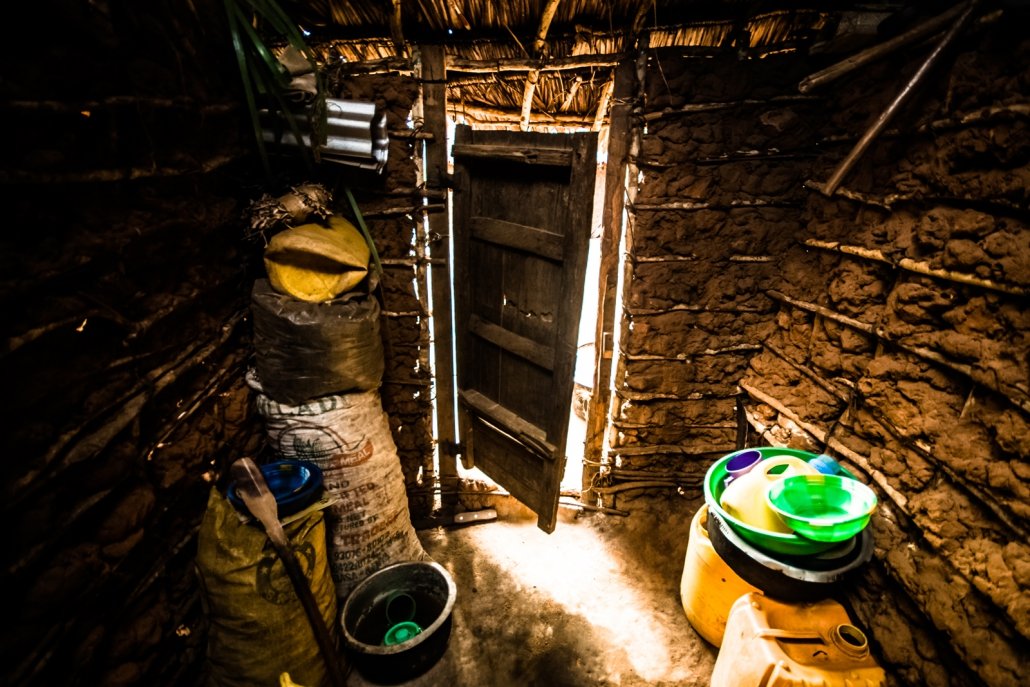
The Child to Child for Africa Foundation has been operating in Jaribuni, a rural village in Kilifi County, focusing on education, food support, health promotion and community-based initiatives across four local areas.
The intervention includes placing children in schools through distance adoption, women’s empowerment meetings, hygiene education and income-generating activities with parents.
What I observed there stayed with me longer than any statistic could: large families, often led by a single parent, navigating scarcity through a kind of pragmatic solidarity.
Child to Child for Africa ↗ELSEWHERE
From the margins,
you see the centre.
I went to Kenya in 2016 with a camera, an open schedule and one question I could not quite articulate yet: what does community look like when it is built through everyday acts of care?
In Jaribuni and Ukunda, through the work of two non-profit foundations, I encountered classrooms, kitchens, gardens, courtyards and vocational spaces where care was not an idea. It was something organized, repeated and shared.
What stayed with me was not distance, nor difference, but recognition: people creating systems of support where life asks for more than one person can carry alone.
There were families, teachers, house mothers, students, children and local communities building forms of continuity from the ground up.
From the margins, the centre became clearer: not as a place of power, but as the place where responsibility, tenderness and survival meet.




MAMA LORENZA’S VOCATIONAL CENTER
Skills as a form
of autonomy.
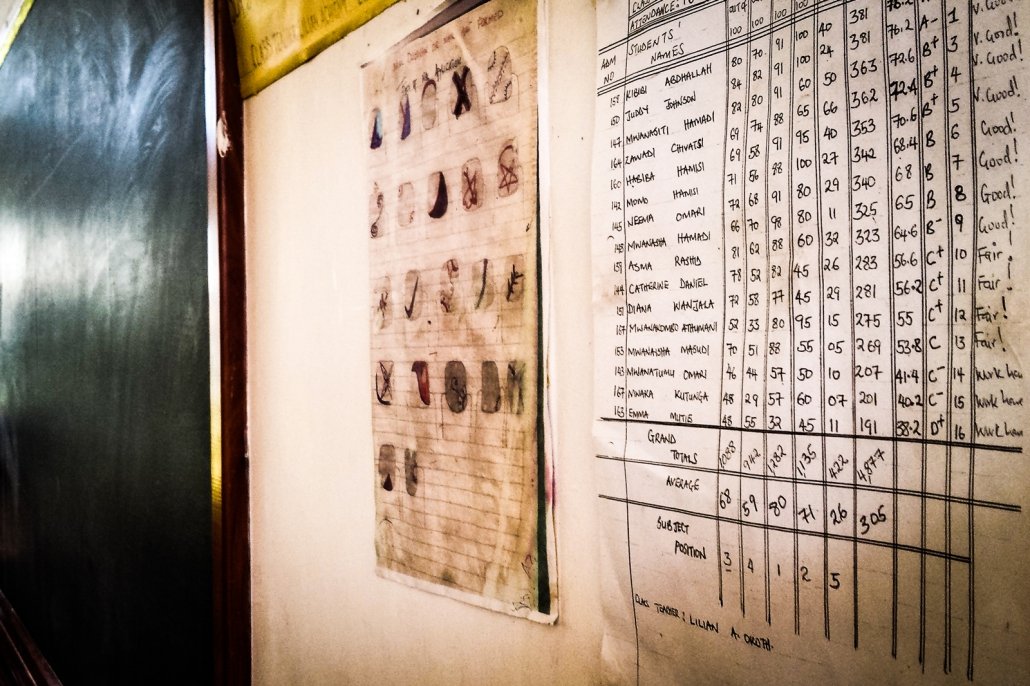
Founded in 2011 in Ukunda, Mama Lorenza’s Vocational Center works on female empowerment and psychological support in a safe environment, providing professional education for young women with challenging backgrounds.
Around 70 students pass through every year. The two-year program covers tailoring, leather processing, hairdressing, cosmetics, computer science, management and cooking.
Students tend the center’s garden, contribute to bread production and chicken breeding, and sell their work through an in-house showroom and salon. Each student receives counseling sessions focused on autonomy and decision-making.
At the end of two years, they sit an exam. They leave with a diploma, and with something harder to name but easier to recognize.




GERMANO CHINCHERINI FOUNDATION
A home built
around care.
In 2008, the Germano Chincherini Foundation opened the first block of Nyumba ya Watoto 1, House of Children, in Ukunda, a semi-rural village in Kwale County near Diani Beach.
The project supports children who have lost their parents, housing them in small family units of 8 to 10. Each home has house mothers who raise, nourish and educate them on a monthly salary from the Foundation.
Each home has electricity, running water, separate rooms for boys and girls, a courtyard, gardens and a communal kitchen. A vegetable garden, called shamba, is tended by the children themselves when not at school, and the harvest is shared across all homes.
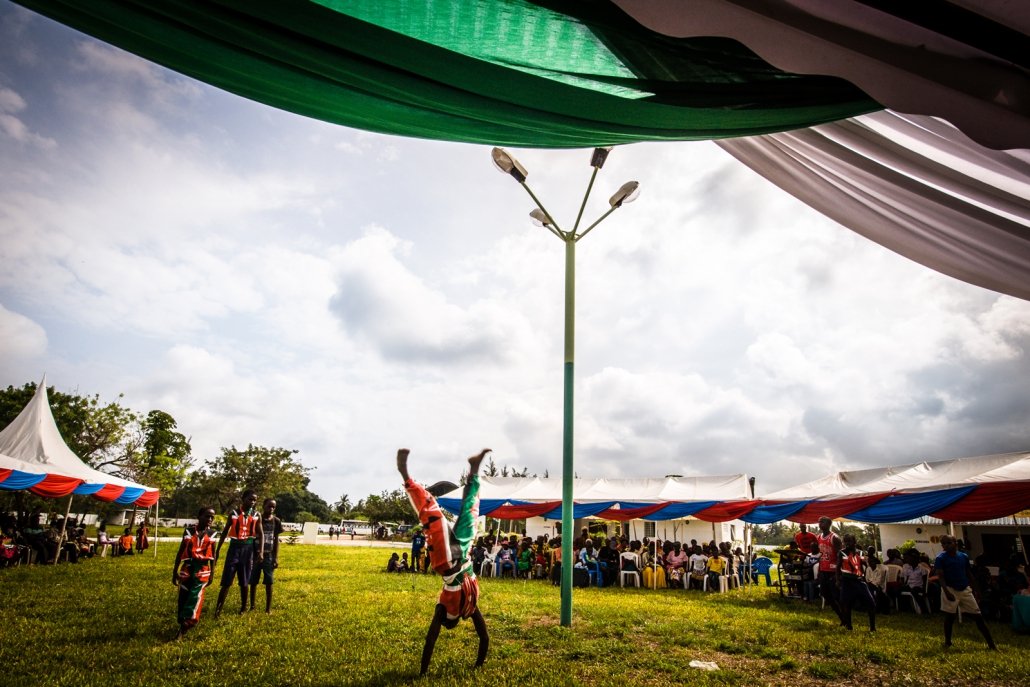
From time to time, the Foundation organizes gatherings between the children and their birth parents. The children prepare songs, dances and acrobatic performances. They show what they’ve learned. Their parents come, when they can.
Germano Chincherini Foundation ↗



PRINT EDITIONS
Available
as a print.
Physical fine art prints from this project, produced on demand and sold unframed.
Available sizes
Shipping is added at checkout: Germany €6.90 · EU €14.90 · International €24.90
Studio pick-up in Berlin is available by appointment.
For questions, custom sizes or direct arrangements, contact andirellaphoto@gmail.com